
The Field Notes: Flap Jack & Joylene (1938-1940)
Discover Flap Jack and Joylene's Discography
They say Flap Jack Stevens was only eighteen when he started wandering, but he carried a voice that sounded like it had been sitting in the mud for a century. He met Joylene Smithfield on a porch in High Point, NC, where she was known for singing call-and-response with the local church choir—only she had a grit in her throat that the preacher didn't much care for. They became a myth before they became an act. People called them the "Saints of the Dirt Road" 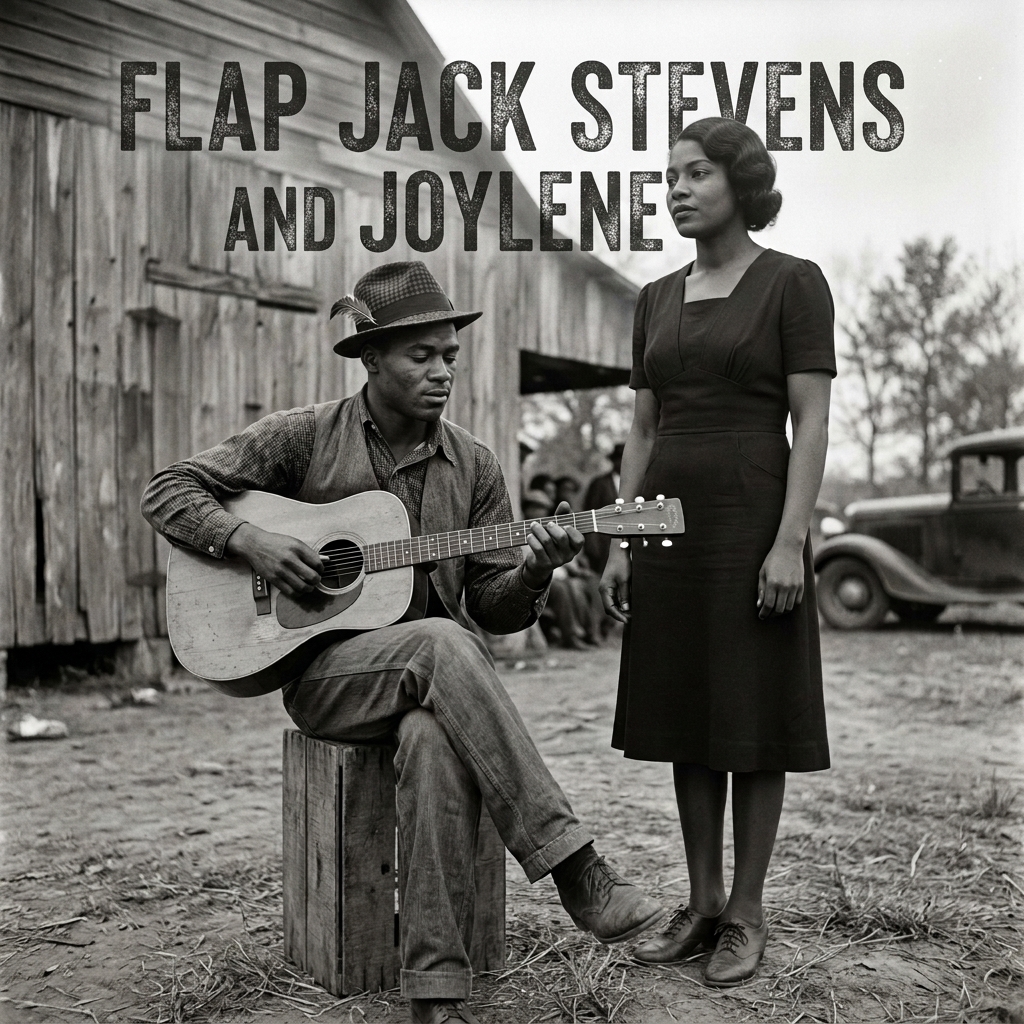 because they always seemed to appear exactly where the dust was thickest and the hope was thinnest.
The legend goes that in the spring of '34, a silver V8 Ford slowed down near a field where Flap Jack was working. A man at the wheel and a girl with a sweet, dangerous smile tossed a roll of greenbacks into the dirt. They didn't say a word, just kicked up dust and vanished. That moment defined Flap Jack’s world—the idea that mercy doesn't always come from the law; sometimes it comes from the outlaws. Joylene joined him shortly after, her voice acting as the shadow to his rugged baritone. They didn't need a band. They just needed his battered guitar and the shared memory of that silver V8. They disappeared from the records around 1940, leaving behind only a handful of raw, buzzing recordings that sound like survival set to music.
Born in 1920, the boy who would become Flap Jack grew up in a shack built on rented land and borrowed time. At fourteen, he was already tall for his age, with a serious, unblinking stare that seemed to look right through the poverty of the Depression. While other boys were playing in the creeks, Flap Jack spent his evenings sitting on the edge of a rotting porch, listening to the rhythm of the work songs drifting over the fence lines. He didn't own a guitar back then. He had a cigar box with some wire he’d stripped from a fence, but he played it with a slide carved from a medicine bottle until his fingers bled into the wood.
The Early Years: Dirt and Resonance
His parents saw the "blues sickness" in him early—that restless, low-down energy that couldn't be cured by a sermon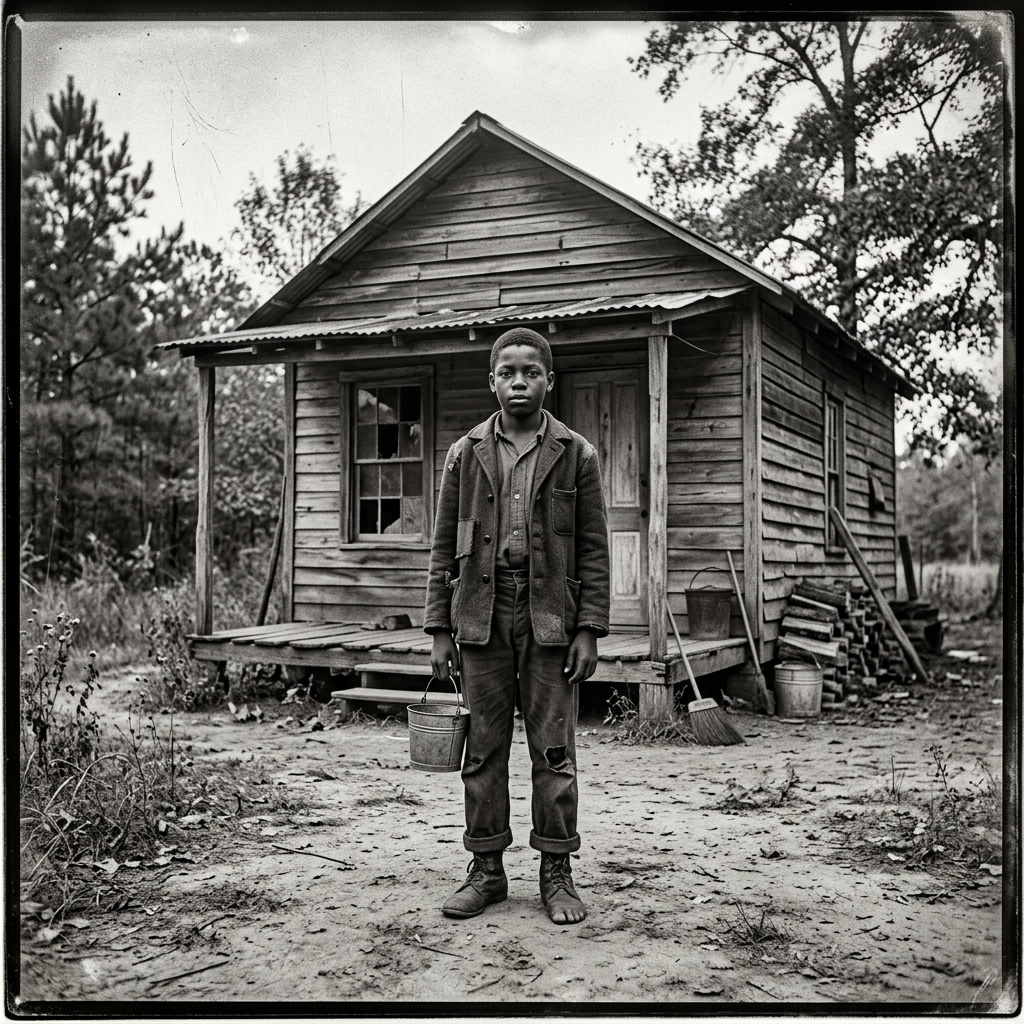 or a day in the fields. It was during these years that he learned how to make his voice drop into that resonant, earth-shaking baritone. He used to practice singing into the empty rain barrels behind the shack, learning how to use the echo to mimic the sound of two men singing at once.
He was born Jackson Stevens, but the name "Flap Jack" stuck to him before he even hit his teens. It wasn't about the food—it was about his hands. Local lore says that when Jackson played that cigar-box guitar on the porch, his thumb would hit the wood with a heavy, percussive slap that sounded like a heavy iron skillet hitting a stove. The old-timers in High Point started saying he was "flapping the wood," and eventually, "Flap-Jackson" got shortened down to just Flap Jack. By the time he met Joylene, the name Jackson was a ghost. To the world, he was Flap Jack Stevens—the man who could make a single guitar sound like a whole rhythm section just by the way he slapped the grain.
By the time he left home at sixteen, he wasn't just a boy with a voice; he was a vessel for the collective ache of the dirt he walked on.
Discover Flap Jack and Joylene's Discography